
375
Healthcare SEO: A Medical SEO Guide for Beginners
Before people book a private GP, a physiotherapist or a scan, many of them search online, read reviews and compare clinic websites. Healthcare SEO helps your website appear in those searches and gives patients the information they need to choose you.
Medical SEO has its own demands. Google holds health content to a higher standard, and UK rules limit what clinics can say and how they handle patient data. This beginner’s guide explains what SEO for healthcare involves, how it differs between types of providers and which steps to take first.

What Is Healthcare SEO?
A clinic, a private practice and a supplier of medical equipment all need a website that patients and customers can find and trust. People often check the list of services, prices, the team and online reviews before they get in touch.
Healthcare SEO is the work that improves a medical website so that it ranks higher in search engines and attracts the right patients. What makes medical website SEO different:
- Expert, accurate content. Google treats health as a “Your Money or Your Life” topic and gives more weight to content with strong experience, expertise, authoritativeness and trust (E-E-A-T). Health content must be accurate and consistent with established expert consensus (Google Search Central);
- Legal limits. In the UK, prescription-only medicines cannot be advertised to the public (MHRA guidance on GOV.UK), and health information is special category data under the UK GDPR, with extra protection (ICO). Patient stories and before-and-after photos therefore need consent and care;
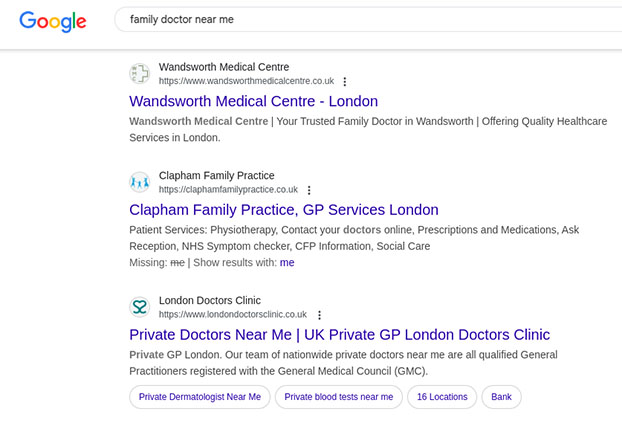
- Specific keywords. Pages should cover both local searches, such as “private GP Oxford”, and the medical terms patients use, such as “knee osteoarthritis treatment”;
- Local SEO. Most clinics serve people who can travel to them, so the website should be shown first to people in your area.
Standard SEO work applies too: technical fixes, mobile-friendly pages and a stronger presence online. The plan depends on the business, because a private clinic in one town and an online health shop that delivers across the UK need different strategies.
The Benefits of SEO for Medical Practices
What does a clinic, practice or medical company get from SEO for medical practices? The main benefits:
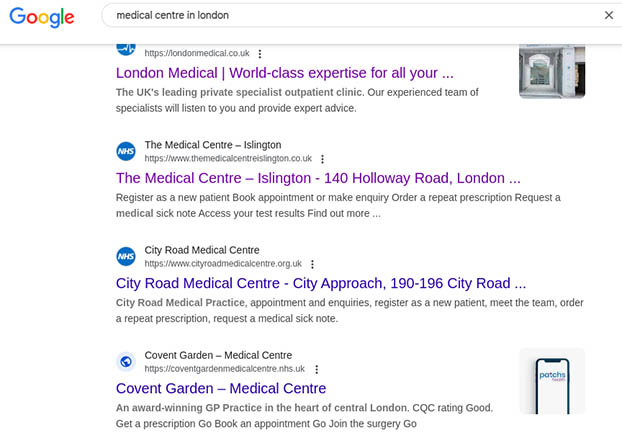
- New patients. Patients tend to choose from the practices they see at the top of the results and in the map, so higher positions can bring more enquiries;
- More trust. A clear site with expert content, named clinicians and real reviews looks professional and answers patients’ questions before they call;
- Easier booking for existing patients. When information is easy to find and patients can book or ask a question online, they are more likely to come back;
- The right visitors. When search engines understand your services, they show your pages to people looking for exactly those services;
- Less reliance on paid ads. Organic visits keep coming without paying for each click, so you can spend less on advertising over time.

Types of Healthcare Providers
SEO for healthcare looks different for each type of provider. The main ones:
- Multi-speciality clinics and medical centres. They offer many services, from diagnostics to surgery, so the focus is on a clear page for each service, the specialists’ qualifications and local SEO;
- Private hospitals. Reputation and a clear overview of treatments, consultants and prices matter most;
- Dental practices. This includes cosmetic dentistry such as whitening. We cover them in detail in our dental SEO guide;
- GPs and private doctors. SEO for doctors helps people who are looking for a new doctor in their area find you. See our SEO for doctors service;
- Medical equipment suppliers. Both suppliers to clinics and companies that sell products for home use;
- Diagnostic centres and laboratories. The focus is on clear descriptions and prices for each test and why it may be needed;
- Rehabilitation and physiotherapy clinics. A blog with practical advice helps show the specialists’ expertise;
- Aesthetic clinics. This includes other providers of aesthetic treatments, where honest descriptions of results and risks are essential;
- Pharmacies. This includes online pharmacies. Remember that prescription-only medicines cannot be advertised to the public.
How to Do Healthcare SEO Step by Step
To make your clinic, practice or shop more visible and attract new patients, you need several kinds of work together. It usually starts with an SEO audit and a look at competitors, then moves to improvements on the website and to your reputation online, with special attention to local searches. Here are the main steps.

Analyse Your Competitors
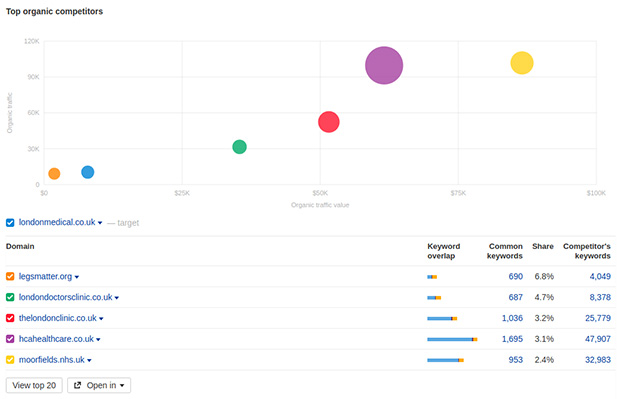
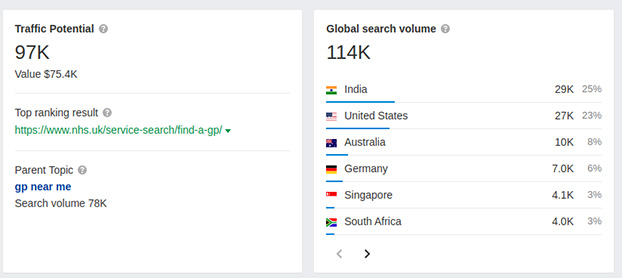
First, study the market. Look at which keywords your competitors rank for, how their websites are organised and which of their pages are most popular. The most useful comparisons are clinics and practices in your town or area with similar services and prices. Helpful tools:
- Semrush: competitors’ keywords, traffic estimates, devices and backlinks;
- Moz Pro: rankings, keywords and backlinks;
- Similarweb: estimated audience, traffic sources and visitor behaviour;
- SpyFu: keyword ideas and competitors’ paid search ads;
- Ahrefs: backlinks, most visited pages and organic keywords.
On-Page SEO for Healthcare Websites
The second step is to improve your website, both for visitors and for search engines. On-page work usually covers:
- A clear structure. Sections and pages in a logical hierarchy, and inside each page clear headings (H1, H2, H3). An FAQ section helps patients with common questions;
- Content. Original, accurate text that uses the words patients search with. Name the clinician who wrote or reviewed each medical page and show their qualifications;
- Internal links. Internal linking between related services and articles helps visitors find answers and helps search engines understand which pages matter most;
- Meta tags. A unique title and description for every page, plus correct meta tags for robots, canonical URLs and alt text for images;
- Key information pages. Contact details, information about the clinic or pharmacy, prices, the team, and how you handle complaints and patient data.
Off-Page SEO for Medical Practices
The third step is off-page SEO: work outside your website that builds visibility and reputation. How to do it:
- Add your practice to trusted platforms, such as Google Business Profile, Bing Places, Apple Business Connect and UK healthcare directories that suit your speciality;
- Reply to reviews politely and professionally, without confirming that the reviewer is a patient or sharing any health details;
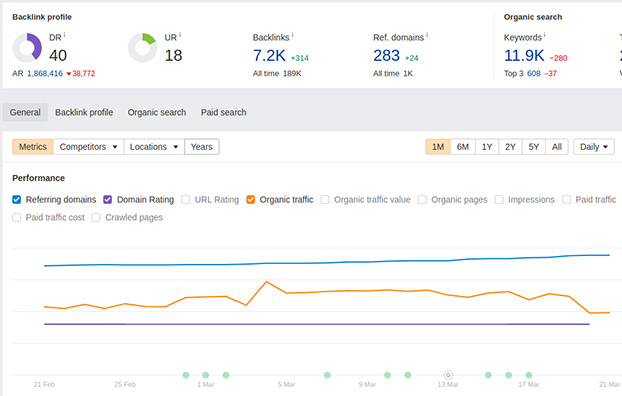
- Earn quality links from relevant sites, such as professional bodies you belong to, partner clinics, local news and guest articles. Google treats paid links and excessive link exchanges as spam (Google spam policies);
- Be active on Facebook, Instagram and other social networks, where many people look for health advice and providers. Photos and short videos matter as much as text.
Local SEO for Medical Professionals
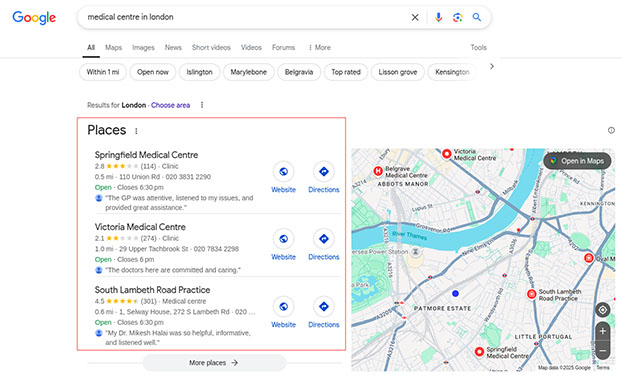
The fourth step is to reach people who live near you. How to do it:
- Add information about your practice to local websites, community groups and forums in your town;
- Show the same name, address and phone number (NAP) on your website and in every directory;
- If you have several sites, create a separate page for each location;
- Make sure your practice appears correctly on Google Maps, Apple Maps and Bing Maps;
- Use local keywords that combine a service with a place, such as “physiotherapy Banbury”.
If you would like help with this part, see our local SEO service.
Technical SEO for Medical Websites
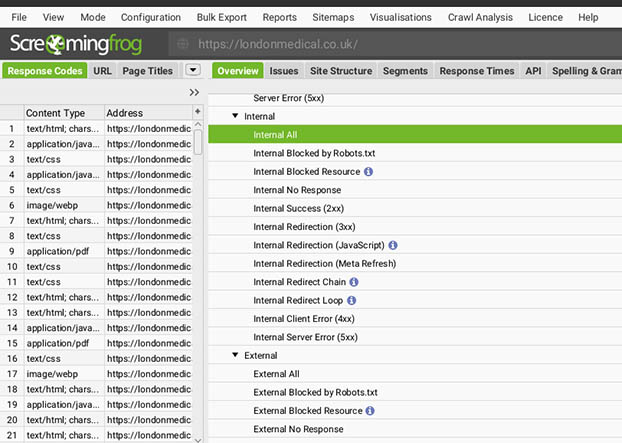
The fifth step is the technical side, which affects both rankings and how patients experience the site. Pages should load quickly, have no errors such as broken links or 404 pages, and display images correctly. The site must work well on any phone or tablet (responsive design), and images and videos should be compressed so they do not slow pages down. Use HTTPS on every page, especially where patients fill in forms.
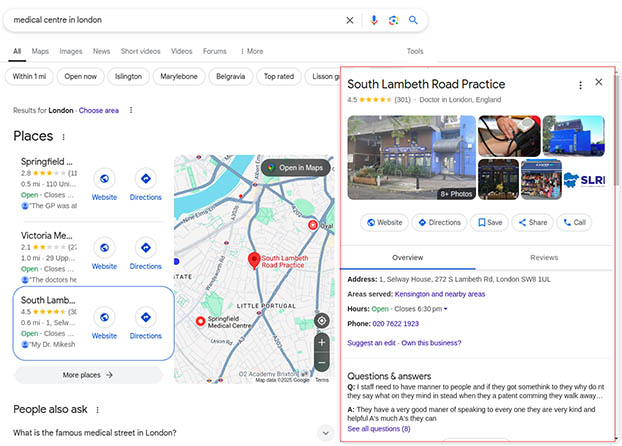
Optimising Your Google Business Profile
The sixth step is to create or update your Google Business Profile. Fill in every field completely and correctly:
- practice or clinic name;
- exact address, matching the NAP on your website;
- phone number;
- website link;
- primary and additional categories;
- opening hours, including holiday hours.
Write a clear, original description of your services in plain English, add real photos of the clinic and team, and keep the information up to date.
10 SEO Tips for Medical Practices
To get the most from your work, follow these tips:
- Focus on your local area first: most patients of a medical practice live nearby;
- Check the technical health of the site with Google Search Console (including its Core Web Vitals report), Google PageSpeed Insights, Screaming Frog SEO Spider and GTmetrix;
- Add good photos and short videos, such as a tour of the clinic or an introduction from a clinician;
- Run a blog with practical advice. It shows your expertise and gives you pages that answer real patient questions;
- Post on social media regularly and reply to messages quickly;
- Keep improving the site and follow changes in Google’s guidance, especially for health content;
- If you use AI tools to draft text, ask a qualified clinician to check every fact before publishing, and never publish copied text;
- Link to trusted sources, such as the NHS website or professional bodies, when you explain conditions and treatments;
- Use paid search, such as Google Ads, alongside SEO if you need enquiries quickly, within the rules for healthcare advertising;
- Build partnerships with other providers for referrals and mentions, focusing on a few relevant partners.
How VOLL Can Help with Healthcare SEO
VOLL Digital Agency has worked on websites, SEO and online advertising since 2008 and is a Google Partner agency. If you would like us to look at your clinic’s website, see our medical and healthcare SEO page and tell us about your website.