
339
Dental SEO: A Step-by-Step Guide for Dental Practices
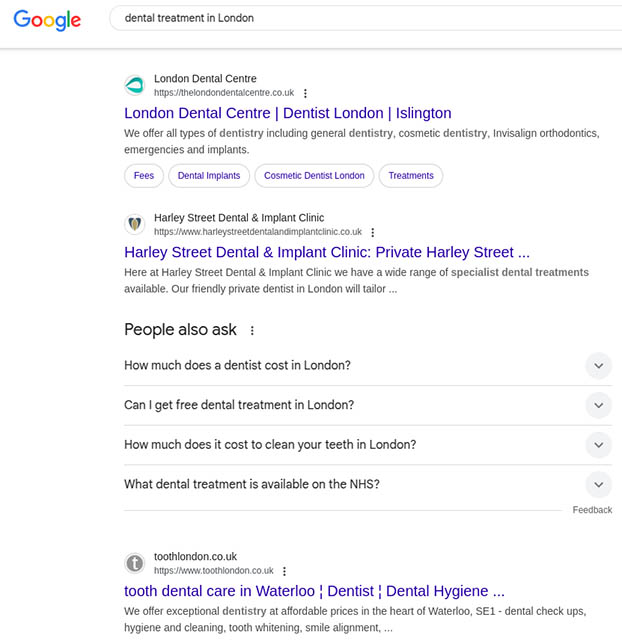
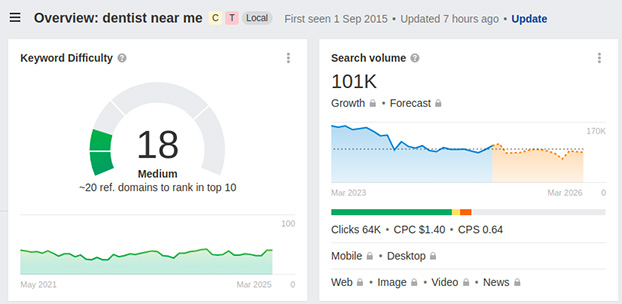
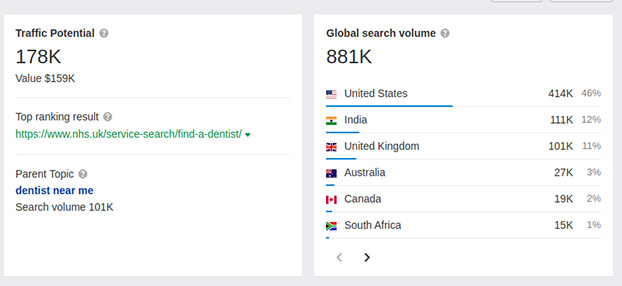
Many people choose a new dentist the same way: they search for “dentist near me”, “emergency dentist” or a treatment such as “teeth whitening” with their town, then compare the practices in the map and the first few results. Dental SEO is the work that puts your practice in those results and helps the visit turn into a booking.
This guide explains SEO for dentists step by step: how to study local competitors, what to fix on your website, how local SEO and your Google Business Profile work, which technical checks matter and what affects the cost. A good starting point for an existing site is an SEO audit, which shows what holds the site back today.

What Is Dental SEO?
Dental SEO is the set of tasks that helps a dental practice appear higher in Google and Bing when people search for dental care. It covers the website itself, your reputation on other sites and your listings in local search. Patients want to see your treatments, prices or “from” prices, opening hours, whether you take NHS patients and who will treat them, so the website has to answer these questions clearly. Dental practice SEO has a few features of its own:
- Local search comes first. Patients usually choose a practice close to home or work, so the aim is to appear for searches such as “dentist Banbury”, “emergency dentist Oxford” or “dental implants Witney”;
- Reputation matters. People read Google reviews and other ratings before they book, so reviews and how you answer them are part of the work;
- Content must be accurate and compliant. Health is a topic where Google gives more weight to experience, expertise and trust. In the UK, the General Dental Council also sets out what a practice website must show, including each dentist’s qualifications and GDC registration number, the practice address and contact details, and the complaints procedure. The same GDC guidance on advertising says claims must be backed by facts, must not create unjustified expectations about results, and only dentists on a GDC specialist list may call themselves specialists;
- A clear structure. Patients should find treatments, prices, opening hours and the booking form in a few clicks, on a phone as easily as on a computer.
How Does Dental SEO Work?
Search engines decide which pages to show by looking at many signals. For a dental website, the ones you can influence most are:
- Technical health: pages load quickly, have no errors and can be crawled and indexed;
- Mobile display: many patients search on a phone, and Google mainly uses the mobile version of a site for indexing and ranking;
- Page structure: clear headings, a unique title and meta description for each page, and a separate page for each main treatment;
- Content quality: accurate, original text written for patients, using the words they search with;
- Usability: visitors find what they need, such as prices or the booking form, without hunting for it.
SEO also works outside your website. Listings in trusted directories, links from relevant local and dental sites, and reviews all help Google see your practice as a real, well-known business, and they bring visitors of their own.

How Much Does Dental SEO Cost?
There is no single price for dentist SEO, because the work depends on your situation. The main factors are:
- how many practices compete for the same searches in your area;
- the condition of your current website: a new site needs a structure and content from scratch, while an established one may mainly need fixes and new treatment pages;
- the scope: basic on-page and local SEO, or ongoing work with articles, reviews and link building every month;
- how many locations and treatments you want to promote.
Ask any provider to explain what is included each month and how progress will be reported. If you would like an estimate for your practice, get in touch and tell us about your website.

How to Do SEO for Dentists Step by Step
SEO for dentists brings results when several kinds of work go together: useful content with the right keywords, technical fixes, faster pages and a stronger presence outside your website. Here are the key steps.
Analyse Your Local Competitors
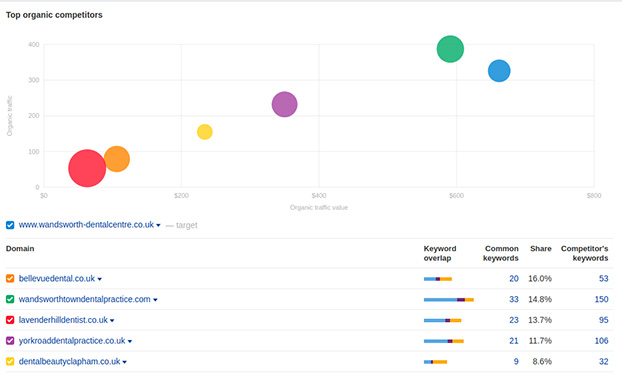
Start by searching for your main treatments with your town, for example “dentist Chipping Norton” or “Invisalign Oxford”, and note which practices appear in the map and in the top organic results. These are the competitors that matter to you. SEO tools show how their websites earn that position:
- Semrush: the keywords that bring them traffic, their backlinks and their competitors;
- Moz Pro: backlinks, keyword rankings and technical issues;
- Ahrefs: organic keywords, their most visited pages and their backlinks.
Google Analytics and Google Search Console show data only for your own site, so use them to track your own visitors and searches.
On-Page SEO for Dentists
On-page SEO is the work on your own website. It usually includes:
- Keyword research. List your treatments and the words patients use for them, together with your town and nearby areas. Mix short searches with longer ones such as “how much is a dental implant in Oxford”. Our guide on how to do keyword research explains the process;
- A clear structure. A page for each main treatment, such as check-ups, hygiene, whitening, implants and orthodontics, with clear headings and links between related pages;
- Useful, accurate text. Explain each treatment in plain English: who it suits, what happens, how long it takes, typical prices and aftercare. Use keywords where they fit naturally. AI tools can help with drafts, but Google expects AI-assisted content to be checked for accuracy, so ask a dentist to review every clinical page;
- Trust signals. Team pages with qualifications and GDC numbers, real photos of the practice, patient information and the date each page was last reviewed;
- Optimised images. Compress photos so they load quickly and write a short alt text for each one, which helps search engines and people who use screen readers.
Off-Page SEO for Dentists
Off-page SEO builds your practice’s reputation outside your own website. The main tasks:
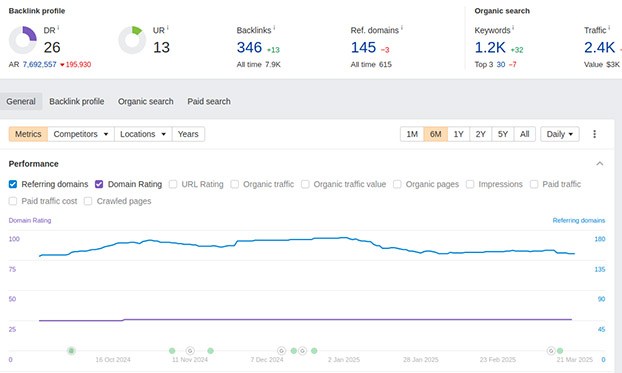
- Quality backlinks. A few links from relevant, trusted sites, such as local news, community organisations, suppliers or dental associations you belong to, do more for your backlink profile than many links from unrelated sites. Google treats paid links and excessive link swaps as spam;
- Reviews and ratings. Ask patients for reviews on Google and other platforms, and reply politely to every review, including the negative ones, without sharing any clinical details;
- Mentions and citations. Keep your name, address and phone number (NAP) the same on every listing, guest article or local website that mentions you;
- Local events and sponsorship. School talks, charity events or a local sports team can earn mentions in local news;
- Directories. Add your practice to trusted UK directories and dental listings;
- Social media. Instagram and Facebook posts about your team, the practice and patient advice keep you visible to local people. Reply to messages quickly;
- Media. Comments for local or dental press help build authority and bring new visitors.
Local SEO for Dentists
Local SEO for dentists helps your practice appear when people nearby look for dental care. Google says local results are based on relevance, distance and prominence, and that more reviews and positive ratings can help local ranking (Google Business Profile Help). The key steps:
- Use local keywords that combine a treatment with your town or area, and add them to your main pages, headings and contact page;
- List your practice in local directories and community websites;
- Create and complete your Google Business Profile (formerly Google My Business): the right category, address, phone number, website, opening hours, treatments and real photos;
- Show your full address, phone number, email and a map on the website, exactly as they appear in your profile;
- Publish content for local patients, such as advice for parents at nearby schools or news about extended opening hours;
- Work with local businesses, such as pharmacies, gyms or employers, for mutual mentions.
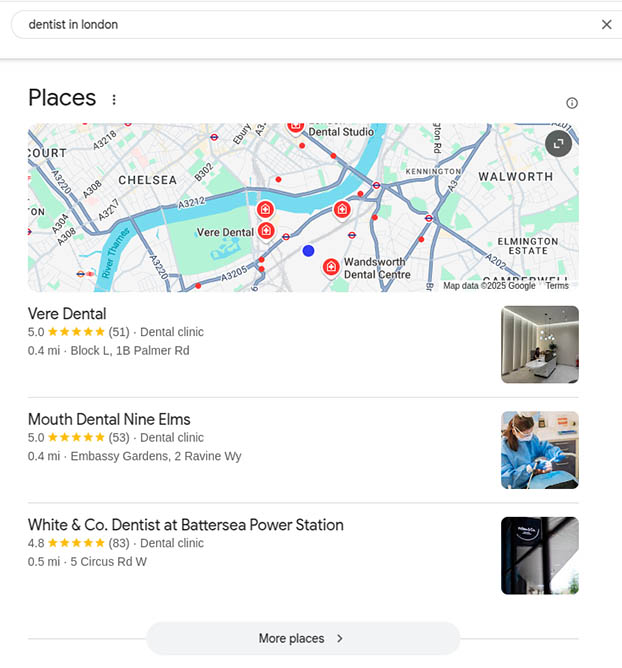
If you would like help with this part, see our local SEO service. The example below shows the kind of local results a dental practice can appear in:
Technical SEO for Dental Practices
Technical SEO makes sure search engines can crawl and index your pages and that patients have a smooth experience. What to check:
- Mobile display: the site should look right and work well on any phone or tablet;
- URLs: short, readable addresses with a clear hierarchy, such as /treatments/dental-implants;
- Core Web Vitals: Google measures page experience with three Core Web Vitals: Largest Contentful Paint (LCP), 2.5 seconds or less; Interaction to Next Paint (INP), 200 milliseconds or less (INP replaced First Input Delay in 2024); and Cumulative Layout Shift (CLS), 0.1 or less. Google PageSpeed Insights, GTmetrix and WebPageTest show these figures for your pages;
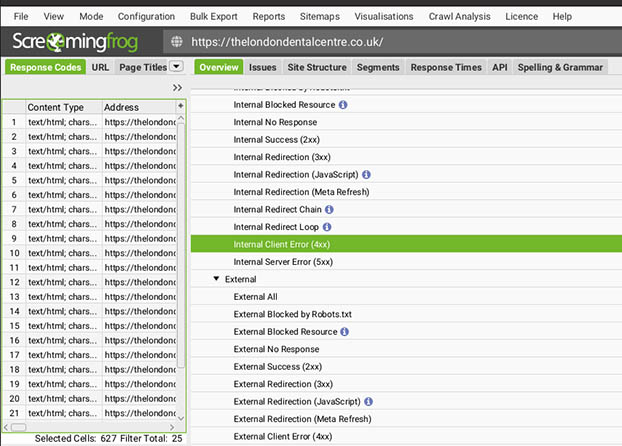
- Errors: fix broken links and 404 pages, and redirect old addresses to their new pages;
- Sitemap and robots.txt: an up-to-date XML sitemap and a correct robots.txt file help search engines find your pages;
- Security: HTTPS on every page, regular updates of the CMS and plugins, and protection against hacking;
- Structured data: structured data with the Dentist type from schema.org helps search engines read your address, phone number and opening hours, and Open Graph tags control how pages look when shared on social media.
When to Hire an Agency for Dental SEO
You can do the basics yourself: complete your Google Business Profile, ask patients for reviews and make sure every treatment has its own page. Technical fixes, content for each treatment, link building and monthly analysis take more time and tools, and that is where an agency helps. Before you hire one, ask what exactly they will do each month, how they report results and whether they understand the rules for healthcare websites. For a wider view of the sector, read our healthcare SEO guide.
VOLL Digital Agency has worked on websites, SEO and online advertising since 2008 and is a Google Partner agency. To see how we can help your practice, visit our dental SEO services page.