
1216
SEO for Auto Repair Shops and Garages: A Complete Guide
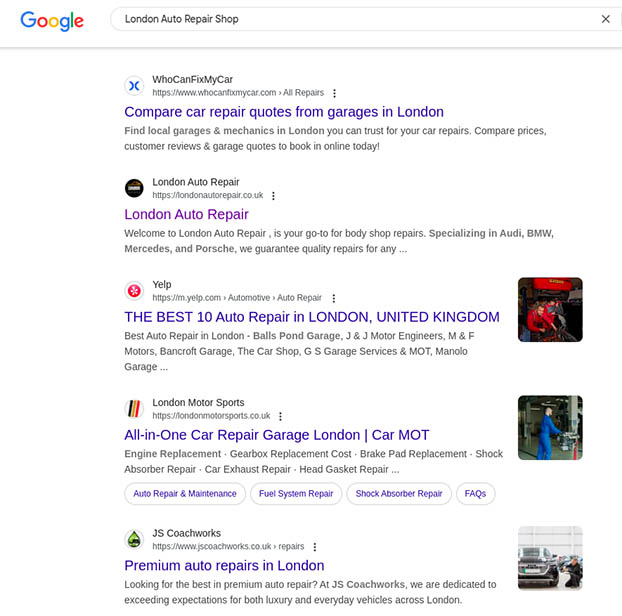
Many drivers look for a garage the same way: they type “mechanic near me”, “MOT near me” or “car service” with their town into Google and choose from the map and the first few results. SEO for auto repair is the work that gets your garage into those results and turns the visit into a booking.
This guide explains what SEO for garages and independent auto repair shops involves in the UK: how to study local competitors, what to fix on your website, how local SEO and your Google Business Profile work, and which technical checks matter. It is written for owners and managers who want to understand the work before doing it themselves or hiring help. It comes from VOLL, a digital marketing agency working since 2008.

Why SEO Matters for Garages and Auto Repair Shops
A website on its own does not bring in bookings. If Google cannot find, understand and trust your pages, they will not appear when local drivers search, and the site only works for people who already know your name. Good car repair SEO helps in five ways:
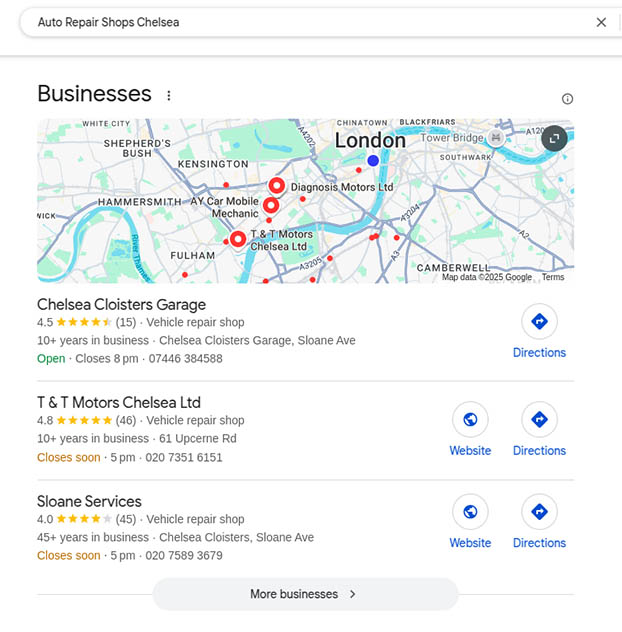
- Visibility in local searches. Searches such as “garage near me” or “brake repair” with a town name show a map with a few local businesses, followed by the organic results. A place in either puts you in front of drivers who need a garage now;
- The right visitors. Pages built around the services you actually offer, such as MOT, servicing, diagnostics, tyres and brakes, attract people looking for exactly those services in your area;
- More trust. A clear site with prices or “from” prices, opening hours, photos of the workshop and recent reviews answers the questions drivers have before they call;
- More calls and bookings. When the phone number, booking form and directions are easy to find on a phone, more visits turn into enquiries;
- A stronger reputation. SEO for garages also covers your Google Business Profile and reviews on other sites, which people read before choosing a mechanic.
If you would rather hand this to specialists, see our SEO services.
How to Do SEO for an Auto Repair Shop
Mechanic SEO is a set of steps that you repeat and refine, and the results build up over several months. Start with an SEO audit of your site and a look at the garages that already rank in your area. Then work on four areas together: on-page, off-page, local and technical SEO. What works for a city garage with ten bays may not suit a village workshop that only does servicing and MOTs, so the plan should follow your services, your area and your customers.
Analyse Your Local Competitors
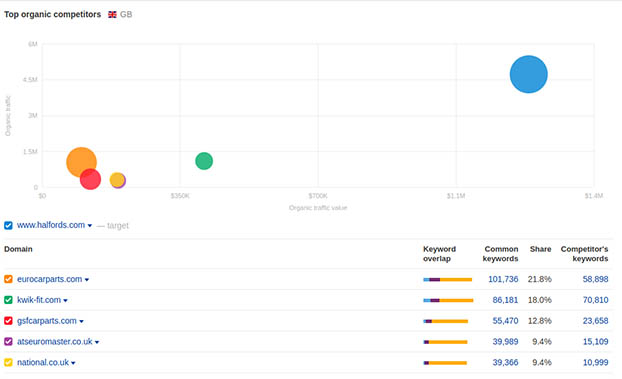
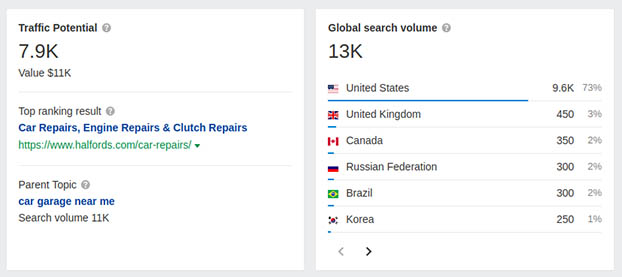
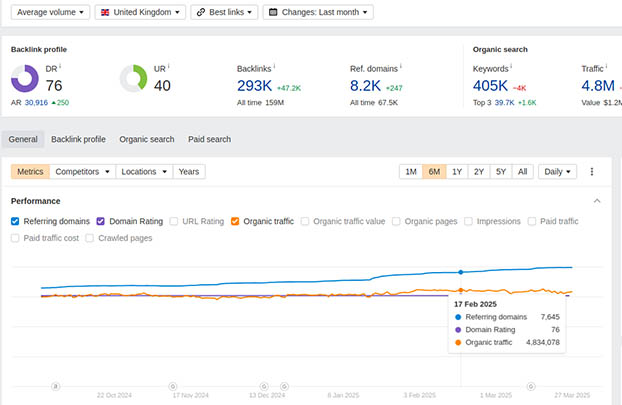
Search for your main services together with your town, for example “MOT Banbury” or “car service Witney”, and note which garages appear in the map and in the top organic results. These are the competitors that matter to you, whatever their size. Then compare their websites with yours. SEO tools such as Ahrefs, Semrush, Similarweb and Serpstat (most offer a free or limited version) show:
- which keywords bring them traffic and which of their pages rank;
- how many sites link to them and how strong their backlink profile is;
- roughly how much organic traffic they get and how it changes over time;
- how their sites are built: separate pages for each service, price pages, pages for nearby towns.
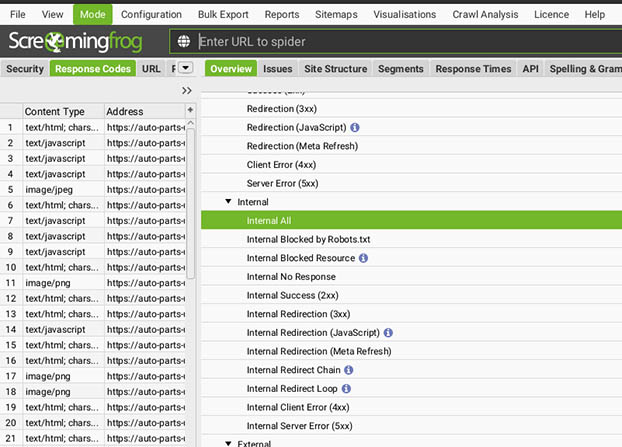
To check a competitor site for technical problems, a crawler such as Screaming Frog SEO Spider or Sitechecker shows broken links, missing titles and slow pages. Google Search Console and Google Analytics show data only for your own site, so use them to track your own progress.
On-Page SEO for Auto Repair Shops
On-page SEO covers everything on your own website: the pages, their text and how they link to each other. Drivers often compare garages online before calling, so the site has to answer their questions quickly. The main tasks:
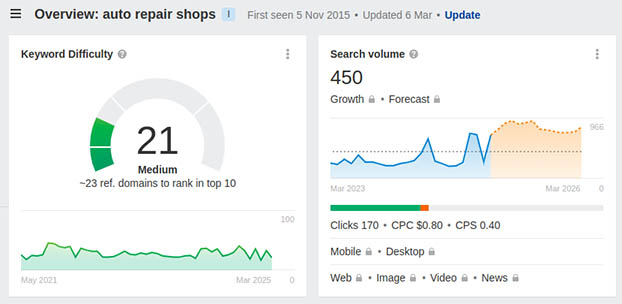
- Keyword research. List the services you offer and the words drivers use for them: “MOT”, “car service”, “brake repair”, “diagnostics”, “mechanic near me”, together with your town and nearby areas. Mix short searches with longer ones such as “full service and MOT price” plus a town name;
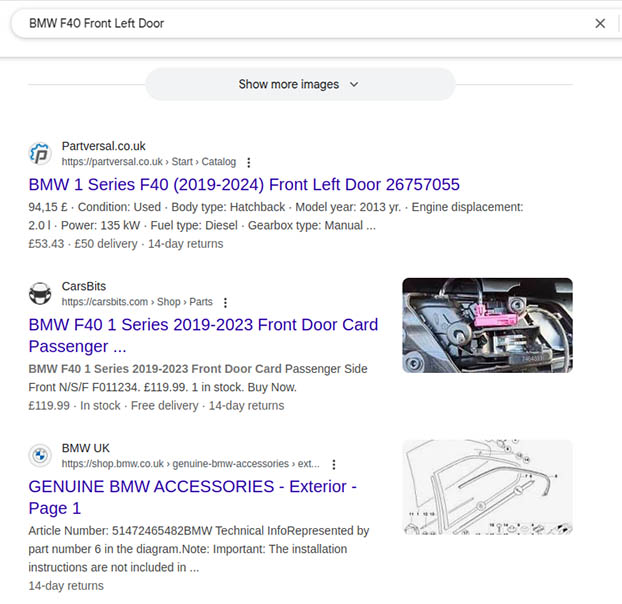
- A page for each main service. MOT, servicing, repairs, tyres, air conditioning and diagnostics each deserve their own page that explains what is included, gives typical or “from” prices and shows how to book. One general “Services” page cannot rank for all of them;
- Titles and meta descriptions. Write a unique title and description for every page with the service and the town, for example “MOT and Car Servicing in Witney | Your Garage Name”. These meta tags have no fixed length limit, but Google shortens long titles to fit the screen, so put the important words first;
- Clear URLs and navigation. Short addresses such as /mot or /car-servicing, a simple menu and an XML sitemap help both visitors and search engines;
- Useful, original text. Explain your services in plain English, add photos of your own workshop and team, and do not copy manufacturer or competitor text;
- Trust pages. An FAQ, a contact page with a map, and details of any accreditations, warranties or memberships you actually hold;
- Internal links. Use internal linking from the home page and blog posts to your key service pages, so search engines see them as the most important pages on the site.
Off-Page SEO for Garages
Off-page SEO is about your reputation outside your own website: links, mentions and reviews. The main tasks:
- Quality backlinks. A few links from local news sites, community groups, clubs you sponsor, motoring forums and suppliers are worth more than many links from unrelated directories. Avoid paying for links;
- Social media. Social media is a useful part of marketing for mechanic businesses: Facebook and Instagram profiles with real photos of jobs, offers and MOT reminders help local people remember you. Reply to messages quickly;
- Replies to reviews. Answer reviews on Google, Trustpilot, Yell and other sites politely and in detail, including the negative ones;
- Local partnerships. Car dealers, valeting services, tyre fitters and driving schools are natural partners for joint offers and links.
Local SEO for Garages
Local SEO helps your garage appear when people nearby search for car repairs. For SEO for MOT garages it matters most of all, because drivers book an MOT close to home and need one every year once a car is three years old (GOV.UK). Google says local results are based on relevance, distance and prominence (Google Business Profile Help). The key steps:
- Mention your town, area and nearby villages on service pages, in headings and on the contact page, in the way people actually search;
- Keep your name, address and phone number (NAP) identical everywhere: on your site, your Google Business Profile, Bing Places, Apple Business Connect, Yell, Thomson Local and other UK directories;
- Add structured data with the AutoRepair type to your contact details, so search engines read your address, phone number and opening hours reliably;
- Take part in local conversations, such as community Facebook groups and local forums, where a helpful answer from a mechanic is remembered.
If you need help with this part, see our local SEO service.
Technical SEO for Garage Websites
Technical SEO makes sure search engines can crawl and index your pages and that they load quickly on a phone. Google measures page experience with three Core Web Vitals:
- Largest Contentful Paint (LCP), loading: 2.5 seconds or less;
- Interaction to Next Paint (INP), responsiveness: 200 milliseconds or less. INP replaced First Input Delay (FID) in 2024;
- Cumulative Layout Shift (CLS), visual stability: 0.1 or less.
Also check that the site works well on a phone (responsive design), images are compressed, there are no broken links or 404 errors, and every page opens over HTTPS. Caching, modern image formats such as WebP and minified code files are the usual first fixes.
Optimising Your Google Business Profile
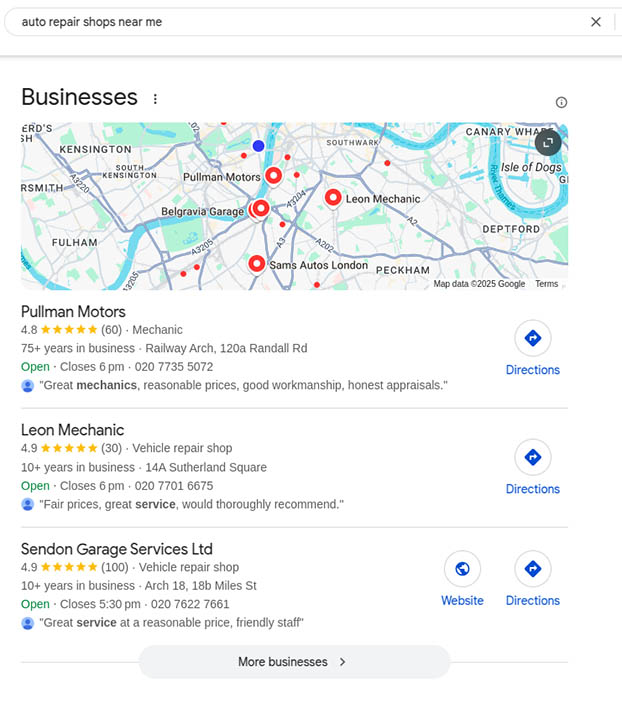
For a garage, the Google Business Profile (formerly Google My Business) is often the first thing drivers see in the map results. Google says that businesses with complete and accurate information are more likely to appear in local results, so:
- Fill in every field: the right primary category, your address or service area, phone number, website and opening hours, including holiday hours;
- List your services, such as MOT, servicing, diagnostics and tyres, with short descriptions;
- Add real photos of the workshop, equipment, team and the cars you work on, and update them regularly;
- Use posts for offers, seasonal checks and news.
Reviews matter too: Google notes that more reviews and positive ratings can help local ranking, and that replying shows customers you value their feedback. Ask happy customers for a review, but do not offer discounts or other rewards for it: Google does not allow incentivised reviews.
SEO Tips for Garages and Mechanics
A few practical tips that help garages avoid common mistakes:
- Get links from relevant local and motoring sites, and stay away from spammy forums and link farms;
- Check your rankings and the technical health of the site regularly, for example once a month in Google Search Console;
- Answer questions about car problems on Reddit, Quora and local groups without pushing links: it builds awareness of your name;
- Do not stuff pages with keywords. Write for drivers and use keywords where they fit naturally;
- Use modern image formats such as WebP to keep photos sharp at a smaller file size, which helps loading speed;
- Write service descriptions and blog posts that answer real questions, such as “how long does an MOT take” or “what is included in a full service”. Google aims to show helpful content written for people;
- Put local SEO first: most garage customers come from nearby.

How to Choose an SEO Agency for Your Garage
Before you hire an agency, check:
- how long they have been working and which results they can show in their portfolio and case studies;
- whether they understand local SEO and service businesses like yours;
- what other clients say about them on Google and other independent review sites;
- what exactly they will do each month and how they will report on calls, bookings and rankings.
VOLL has worked on websites, SEO and online advertising since 2008 and is a Google Partner agency. To see what we offer, visit our SEO services for auto repair shops page, or tell us about your garage through the contact form.
FAQ
How long does SEO take for a garage?
There is no fixed timeline. Updates to your Google Business Profile and reviews can affect the map results fairly quickly, while organic rankings for service pages usually build over several months. The more garages compete in your area, the longer it takes.
Do I need a website if I have a Google Business Profile?
Yes. The profile helps you appear in the map, but a website gives you room to explain each service, show prices and take bookings. Google also uses your website to understand what you offer, and the profile links to it.
Is Google Ads better than SEO for a garage?
They do different jobs. Google Ads brings calls from the first day but stops when the budget runs out, while SEO takes longer and keeps bringing visits. Many garages use ads for busy services or quiet weeks and build SEO alongside. We compare both in contextual advertising or SEO.
Can I do SEO for my garage myself?
You can do the basics yourself: complete your Google Business Profile, ask customers for reviews, create a page for each main service and keep your details the same everywhere. Technical fixes, link building and regular analysis take more time and tools, which is where an agency helps.