
221
SEO for Restaurants: The Complete Guide
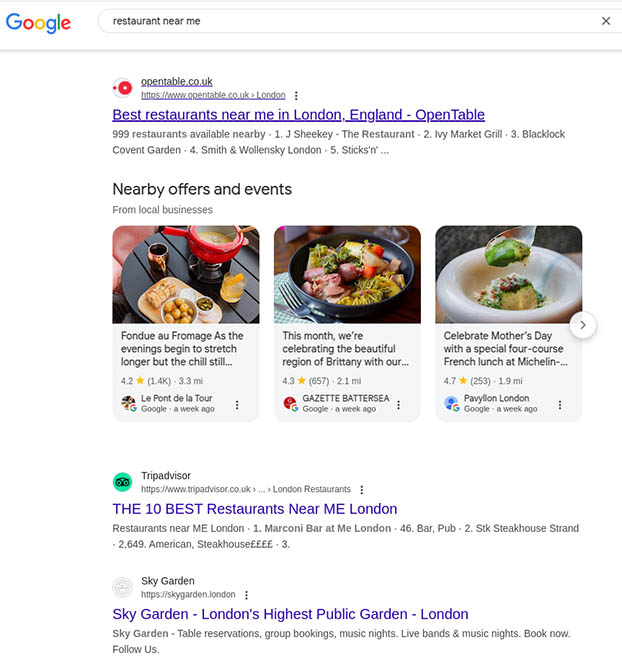
When people want somewhere to eat, they often search for “restaurants near me”, “Sunday roast” or “Thai food” with their town and choose from the map, the photos and the reviews. SEO for restaurants is the work that puts your restaurant, cafe or pub in those results and helps hungry searchers become guests.
Restaurant SEO has several parts: fixing technical problems, giving the website a clear structure, adding useful content about your menu and venue, and building your reputation on Google and review sites. This guide explains each part in plain English, with practical tips you can use yourself.
What Is Restaurant SEO?
Restaurant SEO is the work that helps the website of a restaurant, cafe, pub or takeaway rank higher in search engines and bring in more bookings and orders. It usually combines:
- content marketing: useful pages and posts about your food, events and venue;
- local SEO, so people nearby find you;
- reputation work: reviews, ratings and mentions on other sites;
- technical SEO: speed, errors and indexing;
- usability: the menu, prices and booking are easy to find;
- a site that works well on a phone.
The main feature of this niche is that local SEO comes first. Most guests live in your town or are visiting it, so the work focuses on people within reach of your venue or delivery area.
Restaurant website SEO also depends on how easy the site is to use. Guests want to see the menu, prices, opening hours, location, allergen information and how to book in a few seconds. That means a clear structure, links between pages, useful text and no technical errors. If your current site makes this hard, our restaurant website development page explains how we build sites for restaurants.
The Benefits of SEO for Restaurants
Restaurants and cafes compete hard for guests, and good SEO helps you win new customers and keep regulars coming back. The main benefits:
- A better reputation. Working with reviews and ratings, together with higher positions in the results, builds trust. A clear, well-organised website also makes your restaurant look more professional;
- More convenience for guests. Before visiting or ordering, many people check the location, photos and menu online. When that information is easy to find, they are more likely to choose you;
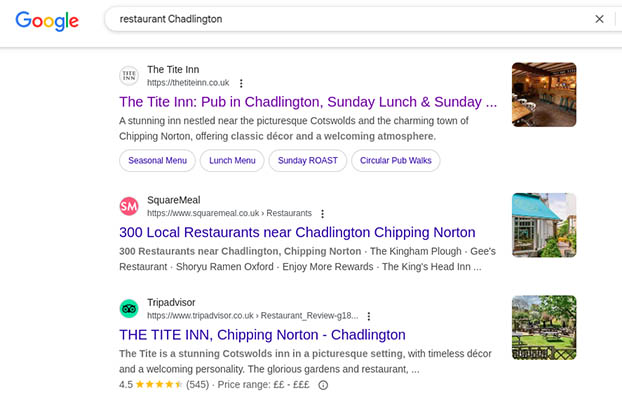
- New guests from nearby. Local SEO helps your website and profile appear for people searching close by, for example “best cafes in Fulham” or “takeaway delivery Witney”;
- More website visits. Higher positions bring more people to your site, and more visits can turn into more bookings;
- Lower advertising costs over time. Organic visits do not cost you per click, so you can rely less on paid ads. We compare the two approaches in contextual advertising or SEO.

Types of SEO for Restaurants
SEO for restaurants works best when you improve the website itself, from technical fixes to good content, and your reputation outside it at the same time. If you already have a website, start with an SEO audit. It will help you:
- find the main problems on the site;
- see how visitors use it;
- understand who your guests are and what they search for;
- check your current reputation online;
- plan the work in order of importance.
A full audit also looks at the restaurants that compete with you in search and the guests they attract. Below are the main types of SEO work for restaurants.
On-Page SEO for Restaurants
On-page SEO is the work on your own website. It often includes:
- Keywords and content. First, collect the keywords guests use to find places like yours: the type of cuisine, the location and services such as delivery, takeaway or private dining. Then write the content: dishes, the menu as text (not only a PDF), the story of the restaurant, seasonal offers, the wine list and events. Finally, use the keywords naturally in headings (H1, H2, H3) and in each page’s title and meta description;
- Clear URLs and structure. Page addresses should be short and readable, such as /menu or /private-dining, and the site should have a simple hierarchy. If you are launching a new website, choose a domain name that matches your brand;
- User experience. Organise the information, link related pages and make the booking button easy to find on every page;
- Images. Good food photos sell, but they should not slow the page down, so choose the right format and size. Add a short alt text to each image;
- Structured data. Structured data with the Restaurant type from schema.org can describe your address, opening hours, cuisine, menu and whether you take reservations.
Off-Page SEO for Restaurants
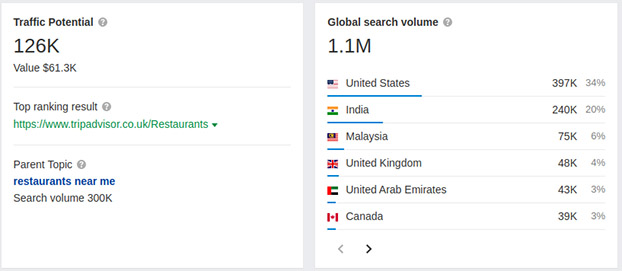
Off-page SEO builds your restaurant’s reputation and visibility outside your own website. For restaurants it includes:
- Reviews. Ask guests for reviews on Google, Tripadvisor and booking platforms such as OpenTable, and reply to them politely and in detail, including the negative ones;
- Social media. Keep active Instagram, Facebook and TikTok profiles with good photos and videos of your food and venue, and reply to comments and messages;
- Links and mentions. Get mentioned on reputable sites: local food guides, food bloggers, local news, tourism websites and trusted directories such as Yell. Guest posts and joint events with local businesses help too. Google treats paid links and excessive link exchanges as spam, so focus on a few genuine mentions. Local citations with your name, address and phone number are a plus.
Local SEO for Restaurants
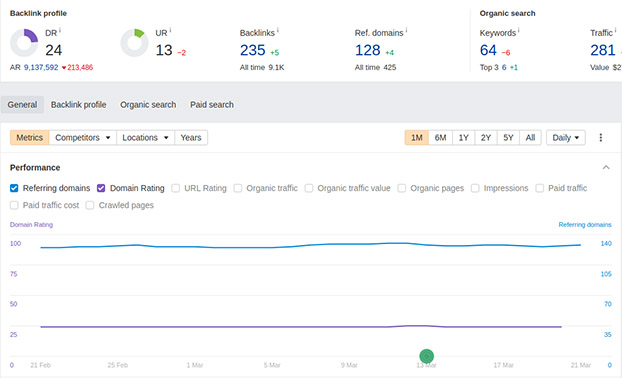
Local SEO for restaurants is one of the most important steps, because it brings in the people most likely to visit: those nearby. Google says local results are based on relevance, distance and prominence, and that more reviews and positive ratings can help local ranking (Google Business Profile Help). How to set it up:
- Use local keywords that combine your area with the type of cuisine or service, such as “Italian restaurant Oxford” or “pub with garden Chipping Norton”;
- Be active on local websites and community groups: events listings, local news and town guides can bring guests and links;
- Create and complete your Google Business Profile (formerly Google My Business): the right category, address, opening hours, photos, a link to your menu and a booking link. Keep it updated for holidays and special events.
If you would like help with this part, see our local SEO service.
Technical SEO for Restaurants
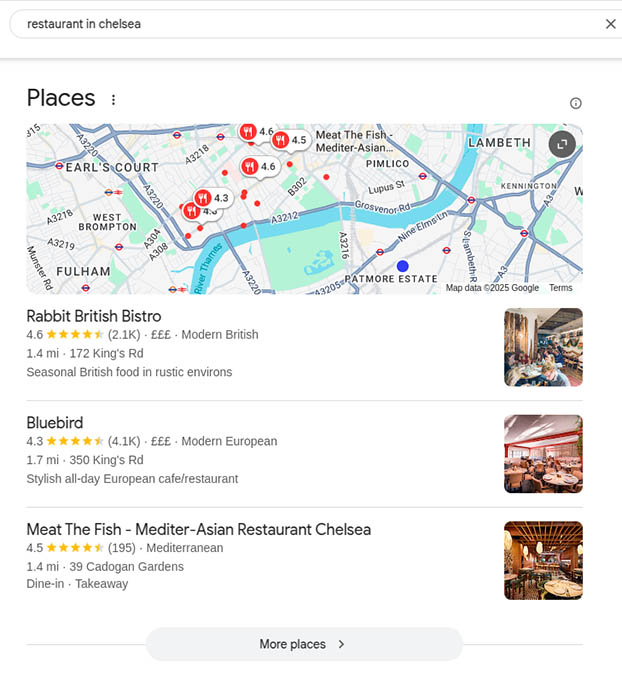
Search engines also look at technical quality when they rank sites. Google measures page experience with three Core Web Vitals:
- Largest Contentful Paint (LCP): how fast the largest visible element, such as a hero image or heading, appears. Good: 2.5 seconds or less;
- Interaction to Next Paint (INP): how quickly the page responds when a visitor taps or clicks. Good: 200 milliseconds or less. INP replaced First Input Delay in 2024;
- Cumulative Layout Shift (CLS): how stable the page is while it loads. Good: 0.1 or less.
Server response time, measured as Time to First Byte, also affects speed. It is not a Core Web Vital, but web.dev suggests 0.8 seconds or less as a rough guide. Fix technical errors, check that pages can be indexed and compress heavy images. Mobile matters most of all: many guests look for a restaurant on their phone, and Google mainly uses the mobile version of a site for ranking.
Restaurant SEO: 10 Tips to Help Your Website Rank
Here are ten practical tips for your restaurant website:
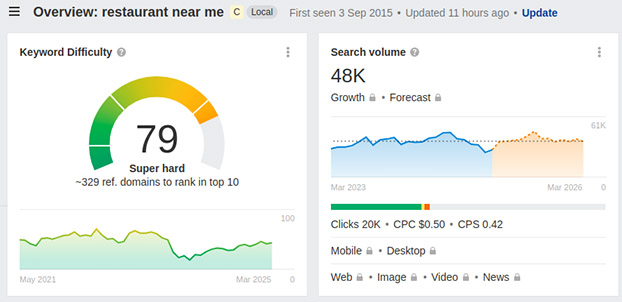
- Find keywords with Google Keyword Planner, Semrush, Ahrefs or Moz Keyword Explorer. Our guide on how to do keyword research explains the steps;
- Write for guests first. Google aims to show helpful, original content written for people. If you use AI tools for drafts, check every dish, price and opening time before publishing;
- Get to know your audience. Google Analytics 4 and Google Search Console show where visitors come from and what they search for, and a short survey (for example with SurveyMonkey) tells you what guests value;
- Add an FAQ that answers real questions about parking, dogs, children, allergens or group bookings. Write it for guests: Google no longer shows FAQ rich results in search (Google Search Central);
- Keep your research and plans in one place. Trello, Notion and Airtable are handy for tasks, notes and tables;
- Write the way people speak. Spoken and typed questions are often longer, such as “where can I get a Sunday roast near me”, so answer such questions on your pages;
- Study your competitors to find good keywords and to see which page structures and content work in your area;
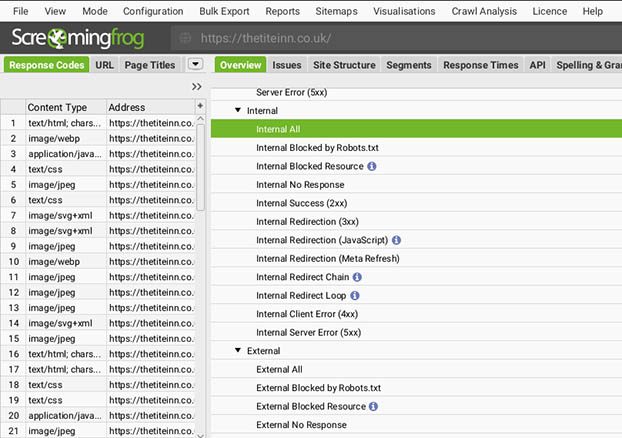
- Test technical performance with Google PageSpeed Insights, Lighthouse, WebPageTest, GTmetrix or Pingdom Tools;
- Be active on social media. Good photos and videos of your food, posted regularly, keep you visible to local people;
- Keep going. Watch how guests behave, follow changes in search and update your menu, photos and content: SEO is an ongoing process.

Need Help with SEO for Your Restaurant?
Doing SEO yourself takes time, and it is easy to miss technical details while running a kitchen. VOLL Digital Agency has worked on websites, SEO and online advertising since 2008 and is a Google Partner agency. To see what we offer, visit our restaurant SEO services page and tell us about your restaurant.